18 Oct 2026
Inside the Algorithms: How Mobile Platforms Simulate Blackjack Shoe Depletion Effects
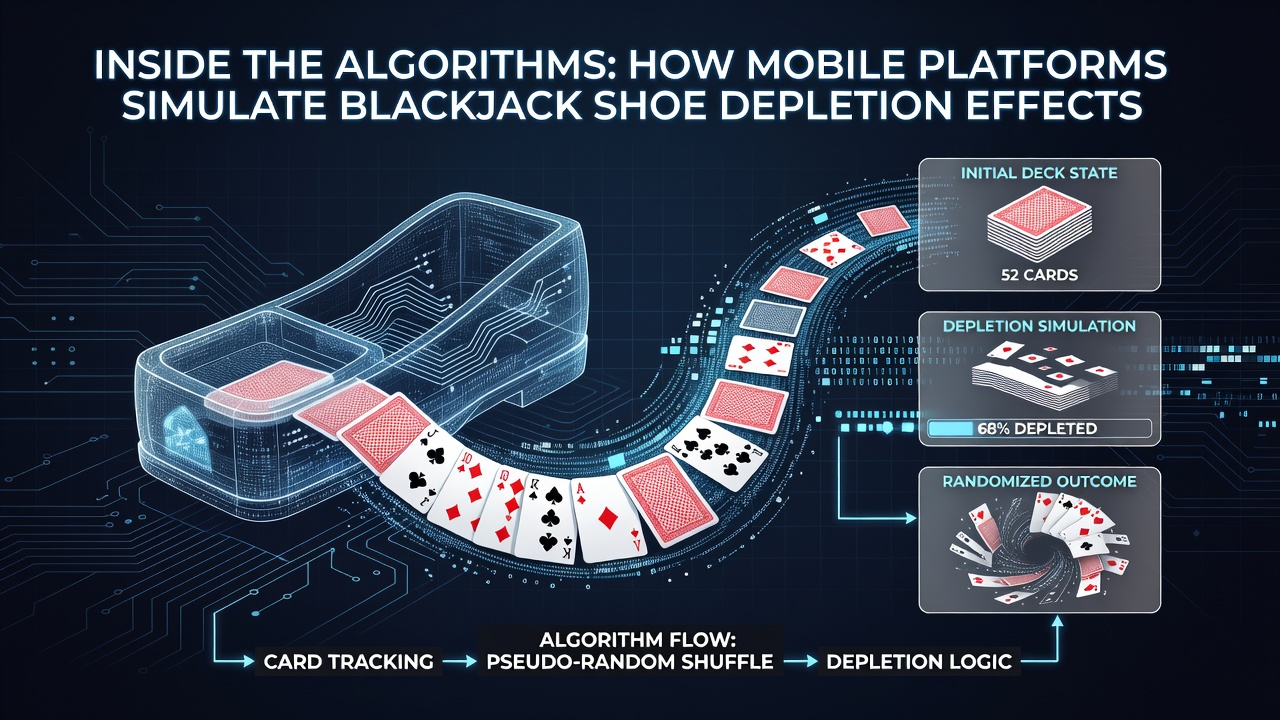 Mobile platforms replicate the physical process of card depletion in blackjack through structured algorithmic models that track remaining cards in a virtual shoe. These systems maintain a finite pool of 52-card decks, typically six or eight in number, and remove each dealt card from availability until a predetermined penetration threshold triggers a reshuffle. Data from industry reports shows that such simulations aim to mirror the shifting probabilities observed in land-based environments where the ratio of high to low cards changes as the shoe progresses.
Core Mechanics of Virtual Shoe Management
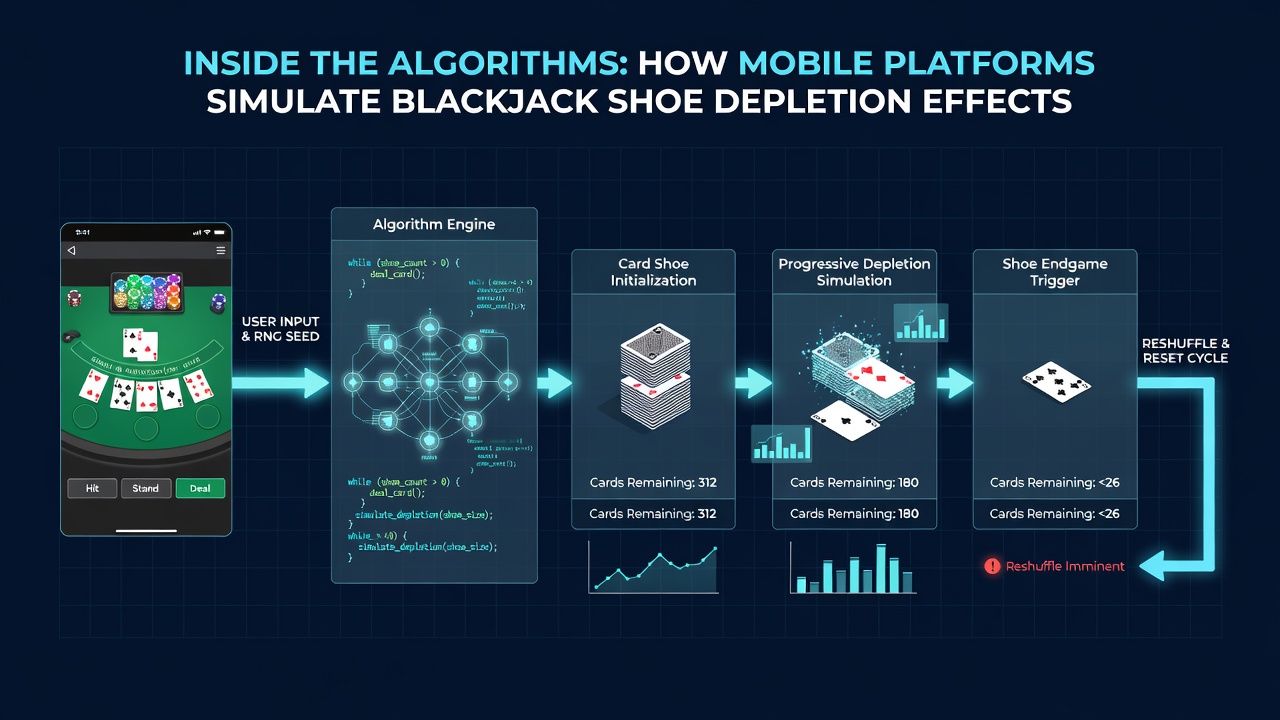
Developers program mobile applications to initialize a multi-deck shoe at the start of each round sequence, then decrement the card count with every draw. When players receive their hands and the dealer completes actions, the algorithm updates an internal array or list structure that represents the current composition. Research indicates that this tracking continues until the shoe reaches a cut-card position, often set between 50 and 75 percent penetration, at which point the remaining cards return to a randomized state and the process restarts.
Random number generators supply the selection mechanism for each new card, yet the depletion layer sits on top of that foundation to enforce non-replacement rules. Figures from technical standards published by the Nevada Gaming Control Board demonstrate that certified systems must pass tests confirming no card reappears before the designated reshuffle point. Observers note that this layered approach prevents the uniform distribution that would occur if every hand drew from a full deck independently.
Penetration Thresholds and Probability Shifts
Penetration levels determine how far into the shoe play continues before reshuffling occurs. Mobile platforms set these values through configurable parameters that operators adjust according to game variant and regulatory requirements. Studies from gaming laboratories reveal that deeper penetration increases the frequency of situations where remaining high cards alter expected values for player decisions such as doubling or splitting.
Algorithms calculate running counts internally when features like strategy recommendations activate, although most consumer applications do not expose these metrics to users. One documented case involved a platform update in early 2026 that adjusted penetration settings across multiple titles to align with revised testing protocols from the Australian Communications and Media Authority. The change produced measurable differences in round-level outcome distributions without altering the underlying random generation process.
Implementation Across Different Device Architectures
Mobile operating systems impose constraints on processing and memory that influence how depletion models execute. Developers optimize array structures and lookup tables to minimize latency between card draws while preserving accuracy in the remaining deck state. Data indicates that iOS and Android implementations converge on similar mathematical models, although differences in floating-point handling can require separate certification paths for each platform.
Networked live dealer integrations combine physical shoe depletion with digital overlays. When a real dealer exhausts a physical shoe, the connected application receives a signal that resets its virtual representation to match. Reports from the European Gaming and Betting Association note that synchronization protocols must verify card-for-card correspondence to maintain integrity across hybrid environments.
Testing and Certification Requirements
Independent testing agencies subject depletion algorithms to statistical suites that examine card frequency, sequence independence, and reshuffle timing. These evaluations include millions of simulated rounds to confirm that the distribution of remaining cards matches theoretical expectations at every penetration depth. Results from such testing appear in compliance documentation submitted to regulatory bodies before software receives approval for public release.
October 2026 saw several platforms undergo recertification cycles that incorporated updated depletion simulation benchmarks. Laboratories applied stricter variance thresholds to ensure that edge cases near the end of the shoe did not produce anomalous outcome clusters. Those who have examined the resulting audit summaries report that the revised criteria tightened acceptable deviation ranges by approximately 12 percent compared with prior standards.
Conclusion
Mobile platforms achieve realistic blackjack shoe depletion through coordinated use of random selection, state tracking, and enforced reshuffle points. The resulting systems deliver card distribution patterns that reflect physical play conditions while operating within the technical limits of handheld devices. Continued refinement of these algorithms aligns with evolving certification standards across multiple jurisdictions, maintaining consistency between digital and traditional formats.