1 Nov 2026
Deck Transitions and Decision Points: Adapting Counting Methods to Thinning Shoes in Mobile UK Blackjack
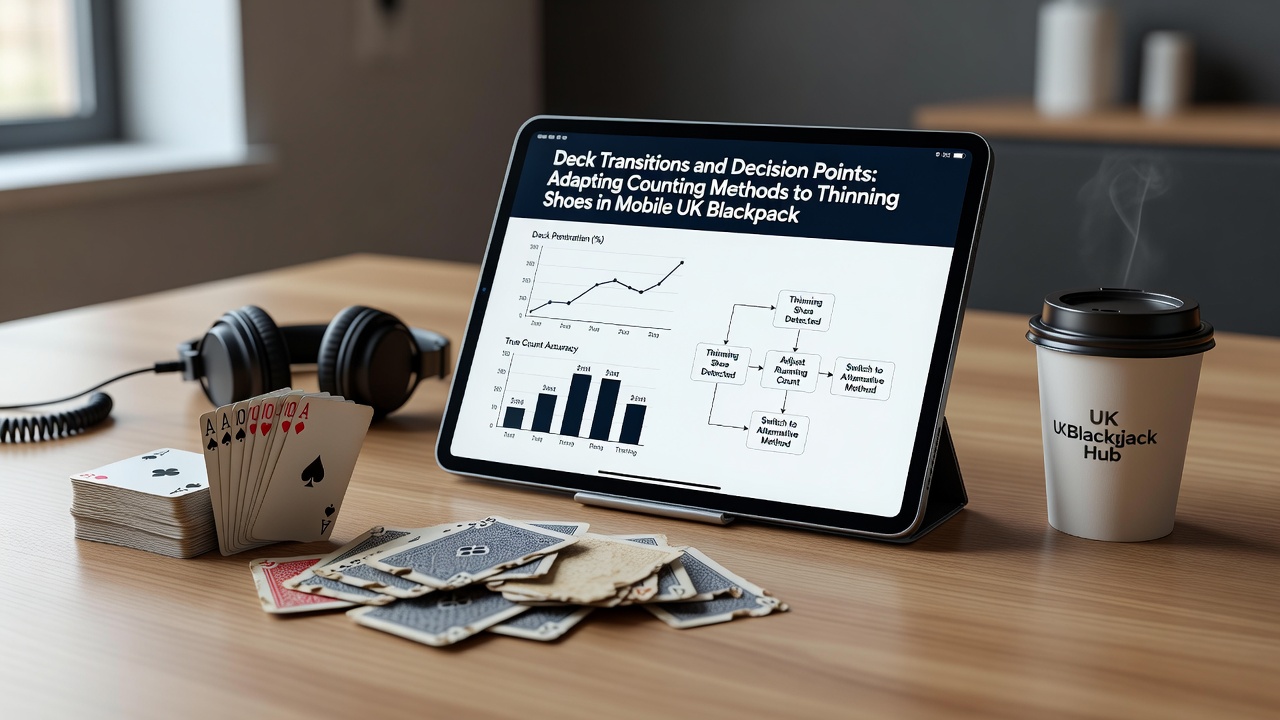
Card counting strategies in blackjack require constant adjustment as the composition of the remaining deck changes, and mobile UK platforms present distinct conditions for tracking these shifts because sessions often involve multi-deck shoes that deplete gradually across shorter playing intervals. Research from the University of Nevada, Las Vegas Center for Gaming Research shows that shoe penetration rates directly influence the accuracy of running counts and true count conversions, with depletion accelerating variance in expected values once more than half the cards have been removed.
Players track the ratio of high to low cards through systems such as Hi-Lo or KO, yet the transition from early to late stages demands recalibration of decision thresholds. Data from table game audits indicate that bet spreads widen most effectively between 60 and 80 percent penetration, while earlier rounds reward conservative unit sizing to preserve edge calculations.
Shoe Depletion Patterns in Mobile Environments
Mobile applications simulate continuous shuffling or finite shoe structures, and the latter creates measurable depletion curves that differ from land-based equivalents because session lengths average shorter yet occur more frequently. Observers note that deck composition tracking benefits from real-time display overlays on many UK-licensed apps, which present running totals without violating platform rules against external devices.
What's interesting is how penetration markers appear at fixed intervals in digital shoes, allowing systematic updates to true count calculations at predetermined card counts. Studies in the Journal of Gambling Studies confirm that players who recalibrate at 25 percent intervals maintain higher correlation between counted values and actual remaining edges compared with those who adjust only at the halfway mark.
Decision Points During Count Transitions
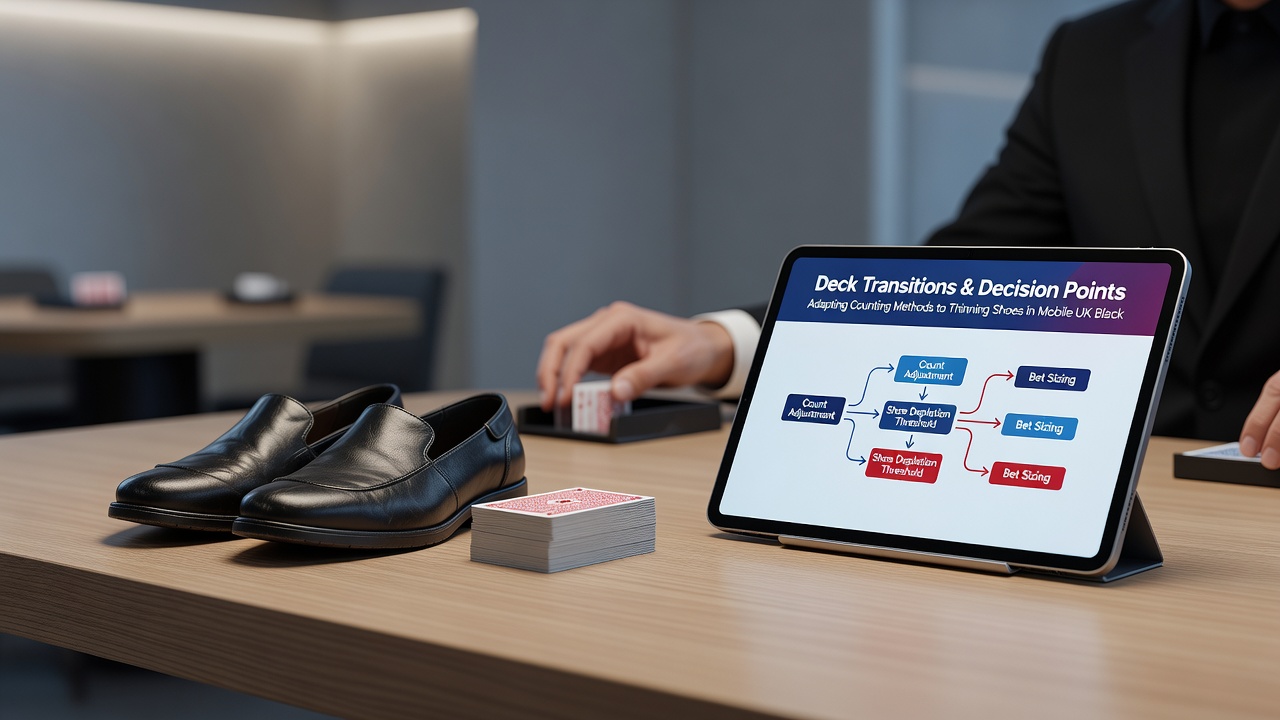
Decision points emerge when the true count crosses integer thresholds that alter basic strategy deviations or bet ramps. In thinning shoes the frequency of these crossings increases because the denominator in true count formulas shrinks, amplifying small changes in the running count. Figures from the Nevada Gaming Control Board reveal that late-shoe deviations such as insurance at true count +3 or doubling on 9 versus dealer 3 at true count +1 produce measurable return improvements when applied consistently.
Platforms in November 2026 introduced optional deck-composition heat maps on several mobile titles, enabling users to visualize high-card density without external aids. These tools integrate with existing count systems by highlighting when remaining cards favor specific index plays, though operators maintain that such displays serve informational purposes only.
Adapting Hi-Lo and Alternative Systems to Mobile Shoes
The Hi-Lo system remains prevalent because its level-one structure simplifies mental arithmetic on smaller screens, yet practitioners adjust the true count conversion factor more frequently once the shoe drops below 104 cards in an eight-deck setup. Alternative counts such as Zen or Red Seven incorporate side counts for aces that become more valuable in late stages when ace density affects insurance and blackjack payouts.
Research indicates that mobile sessions spanning multiple short logins compound the challenge of maintaining a continuous count across breaks, prompting some users to employ session-reset protocols that restart the running count at each login while preserving overall penetration awareness. Those who studied this pattern found that resetting at natural break points preserves edge estimates better than carrying counts across interrupted play.
Practical Thresholds and Index Adjustments
Index numbers shift in utility as the shoe thins because the probability distributions narrow around remaining cards. For example, the decision to stand on 16 versus 10 moves from a basic strategy recommendation to a count-dependent play once the true count exceeds +4, and this adjustment gains additional weight in the final third of the shoe where high-card concentration peaks. Australian Institute of Criminology reports on electronic table games note similar patterns in digital formats where automated dealing maintains consistent shuffle points.
Bet sizing follows a linear ramp tied to true count values, yet mobile interfaces often cap maximum bets to comply with responsible gambling parameters, requiring players to scale unit sizes downward earlier in the count progression to stay within limits.
Conclusion
Deck transitions create recurring decision points that reward precise recalibration of counting methods as shoes deplete, and mobile UK blackjack environments supply both the data streams and the structural constraints that shape how those adjustments occur. Evidence from multiple regulatory and academic sources demonstrates that systematic updates at fixed penetration intervals, combined with index plays calibrated to remaining deck size, produce measurable changes in expected outcomes across repeated sessions.