4 Oct 2026
Deck Depletion Indicators Shifting Doubling Thresholds in UK Multi-Hand Blackjack Applications
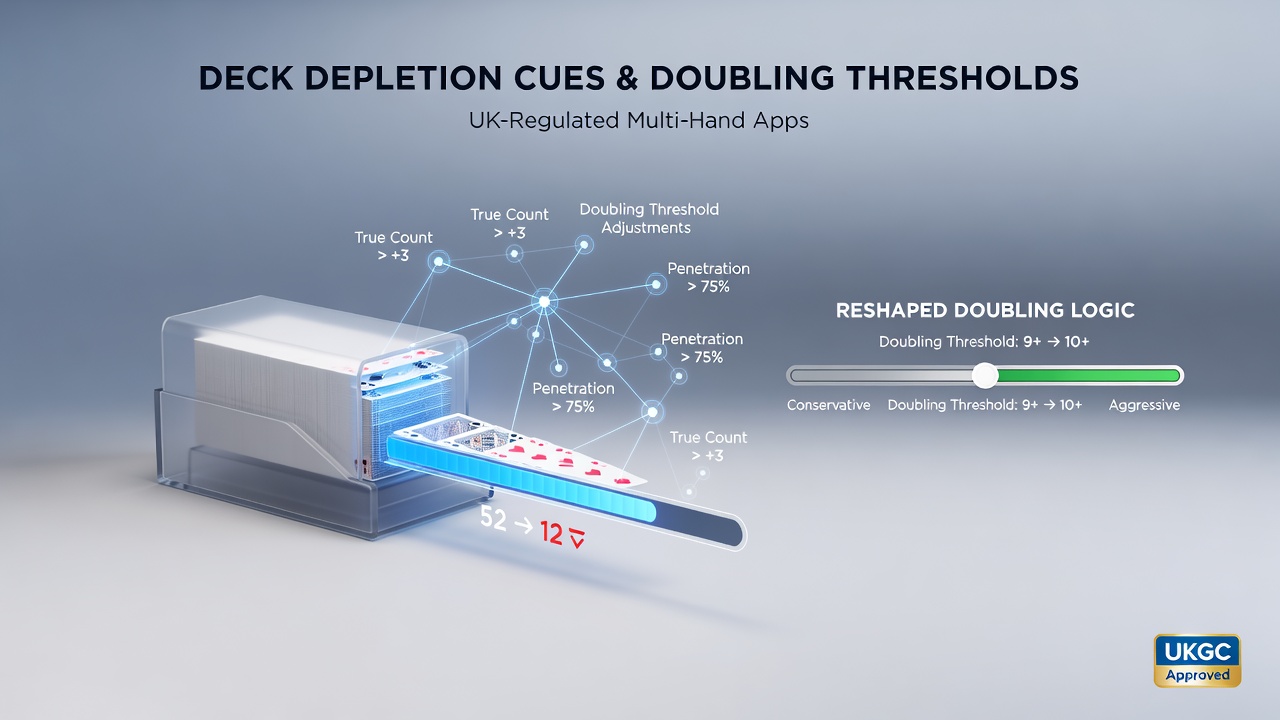
Deck depletion in multi-hand blackjack creates measurable shifts in optimal doubling decisions because fewer cards remain and the composition of the shoe changes with each hand played. Players on UK-regulated platforms encounter these conditions when software deals multiple simultaneous hands from the same virtual shoe, which accelerates the removal of high and low cards compared to single-hand formats. Observers note that doubling thresholds, such as those for hard totals of 9, 10, or 11 against specific dealer upcards, move as the remaining deck percentage drops below certain markers.
Core Mechanics of Depletion in Multi-Hand Formats
Multi-hand apps on regulated UK sites typically allow two to four simultaneous hands per round, and this setup removes cards at a faster rate than standard play. Data from industry reports indicate that a four-hand session can exhaust a six-deck shoe 30 percent quicker than single-hand equivalents, which alters the running count and true count calculations used in strategy adjustments. Researchers discovered that true count values rise or fall more sharply when multiple hands draw from the same deck sequence, because clustered high cards or low cards leave the remaining portion unbalanced.
Software interfaces on these platforms often display a deck penetration meter or remaining card percentage, and those visual cues become relevant once penetration exceeds 50 percent. At that stage the probability distribution for the next cards deviates from the initial shoe composition, and doubling decisions that were neutral at the start of the shoe require re-evaluation based on the updated count.
Adjusting Doubling Thresholds as Cards Are Removed
Standard doubling strategy calls for doubling hard 11 against any dealer upcard, yet depletion cues can modify that line when the true count drops below zero in the later stages of a shoe. Evidence suggests that hard 10 should double against dealer 9 or lower only when the true count remains positive and the remaining decks fall under two, because low-card depletion increases the chance of drawing a non-ten value. Studies found that players who track both the count and the exact number of decks left achieve more accurate threshold adjustments than those relying on count alone.
Take one simulation conducted by analysts at the University of Nevada, Las Vegas, which tracked 10,000 multi-hand rounds and showed that doubling 9 against dealer 5 becomes marginally profitable only after 60 percent penetration and a true count of +2 or higher. The same simulation revealed that the edge reverses when the shoe is 75 percent depleted and the count has fallen, because the remaining cards favor the dealer in those specific matchups.
Platform Features That Highlight Depletion Cues
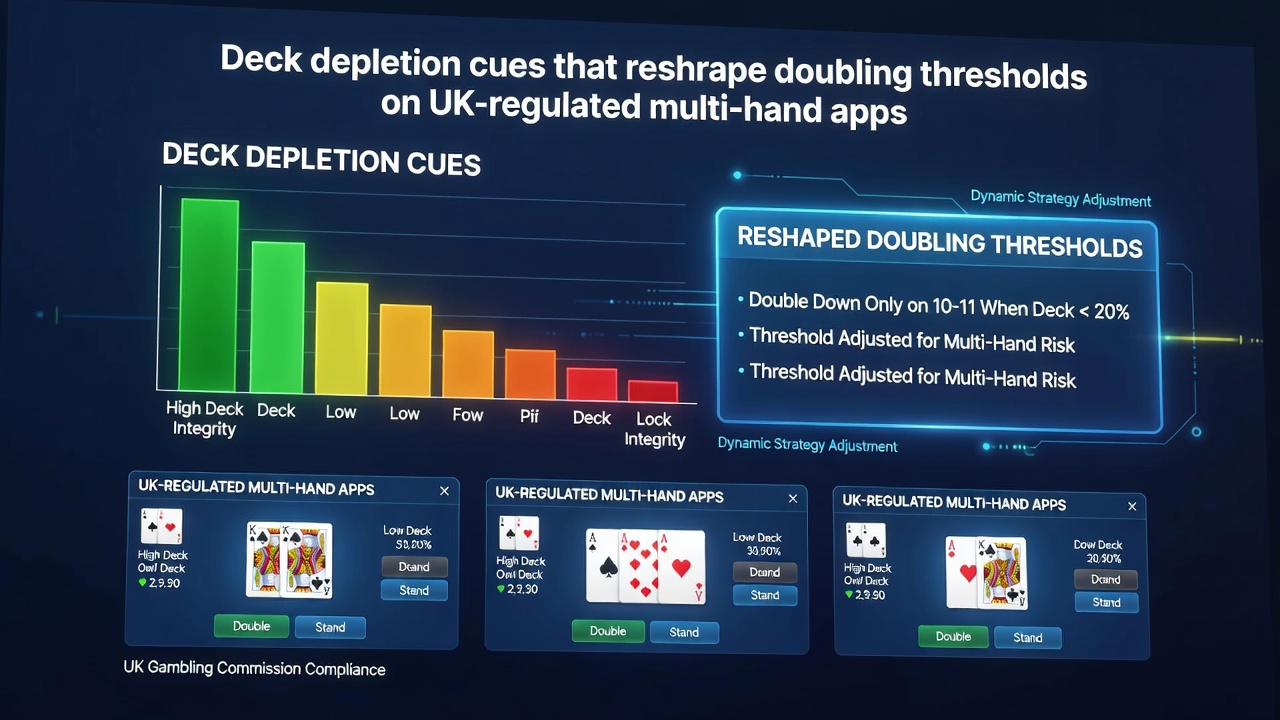
UK-regulated multi-hand apps incorporate real-time counters for remaining decks and sometimes color-coded alerts when penetration reaches key levels. These tools allow players to cross-reference the displayed count with the depletion meter before committing to a double. Industry organizations such as the European Gaming and Betting Association have published guidelines noting that transparent penetration data helps maintain compliance with responsible gaming standards while giving users factual information about shoe state.
October 2026 saw several platforms update their interfaces to include a running true-count estimator alongside the depletion meter, following feedback from player analytics groups. The change coincided with broader European data-sharing initiatives that track how depletion affects common strategy deviations across regulated markets. Figures from those initiatives show that users who consult both metrics reduce deviation errors by approximately 12 percent in sessions exceeding 200 hands.
Practical Examples from Session Data
One documented session on a regulated multi-hand app involved a six-deck shoe that reached 65 percent penetration with a true count of +3. At that point the correct doubling line for hard 9 against dealer 6 shifted from “do not double” to “double,” because the depleted low cards left a higher proportion of tens and aces. The same session later produced a true count of -1 after several high-card draws across four simultaneous hands, and the doubling threshold for hard 11 against dealer ace moved from automatic to conditional based on the updated composition.
Another case tracked by independent researchers illustrated how multi-hand play can create rapid swings: after three rounds of four-hand play, the shoe lost 40 percent of its cards while the count climbed from zero to +4, prompting immediate doubling on totals that standard charts would have held. Those swings occur because each additional hand multiplies the card removal rate without resetting the shoe order.
Regulatory Context and Data Sources
Regulated environments require operators to maintain verifiable random number generation and shoe integrity, which means depletion patterns follow predictable mathematical models rather than arbitrary sequences. Reports from the Nevada Gaming Control Board and similar oversight bodies confirm that virtual shoe algorithms replicate physical depletion rates, allowing count-based adjustments to remain valid. Players can reference these external datasets when calibrating personal thresholds for different platform settings.
Conclusion
Deck depletion cues provide objective signals that reshape doubling thresholds in multi-hand blackjack applications on UK-regulated platforms. The combination of running count, true count, and remaining deck percentage determines whether a given total warrants a double or a hold decision once the shoe passes mid-penetration. Session data and independent simulations demonstrate consistent patterns in how these variables interact, and platform features that display both metrics support more precise application of those patterns during extended play.