15 Nov 2026
Blackjack's Overlooked Layer: How Continuous Shuffling Machines Quietly Reshape UK Player Options
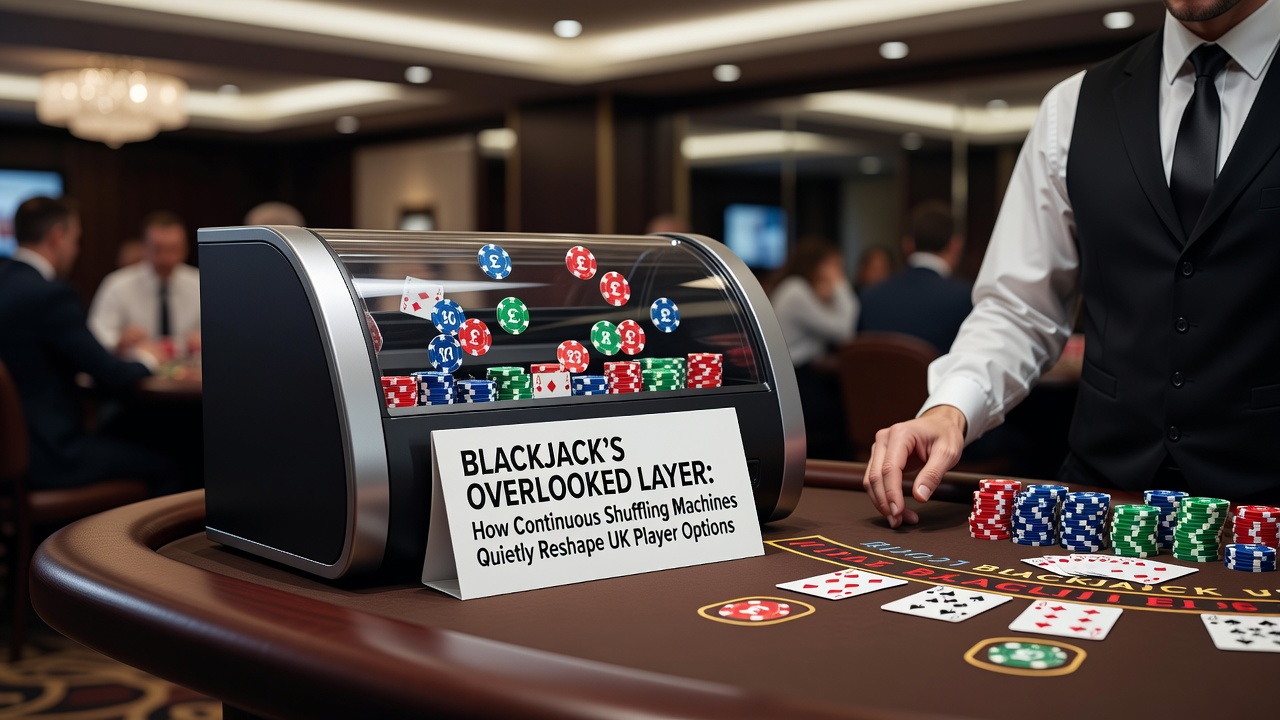
Continuous shuffling machines operate by returning discarded cards to an active deck at regular intervals, which eliminates the traditional shoe depletion cycle that many players once tracked through manual counts. Observers note that these devices maintain a near-constant random distribution across hands, and data from multiple casino floors shows reduced opportunities for strategic adjustments that rely on remaining card composition. Researchers have documented how this setup alters the pace of play while limiting the effectiveness of techniques developed for multi-deck shoes that run down naturally.
Mechanics Behind Continuous Shuffling in Practice
Dealers feed used cards back into the machine after each round, and the device automatically mixes them with the remaining undealt portion so that the next hand draws from a refreshed pool. This process repeats without pause, and industry reports indicate that tables equipped with these units complete more hands per hour compared with standard shoe games. Players encounter fewer situations where low or high card concentrations build up over time, which shifts the decision matrix for doubling, splitting, and insurance choices that depend on known deck composition.
Studies conducted in regulated markets reveal that continuous shuffling removes the end-of-shoe advantage windows that once allowed skilled participants to increase bets when favorable counts emerged. The technology enforces a statistical baseline closer to the theoretical house edge throughout the session, and figures from North American gaming authorities show measurable drops in player return rates at tables using these systems versus those that exhaust a fixed number of decks.
Effects on UK Casino Floor Options
Land-based venues across the United Kingdom have adopted continuous shuffling machines in select blackjack pits, particularly where operators seek to standardize game speed and reduce downtime between shuffles. Patrons who previously selected tables based on visible deck penetration now face more uniform conditions, and this uniformity extends to both minimum-stake and premium areas. Reports from European gaming associations confirm that such equipment appears more frequently in locations licensed for table games, altering the range of strategic environments available during a single visit.
Those who study player behavior observe that continuous shuffling influences table selection patterns, with some participants migrating toward single-deck or manual-shuffle variants when available. Data collected through 2026 indicates steady integration of these machines alongside live dealer streams, and the trend continues into November 2026 as operators balance regulatory compliance with operational efficiency. The result leaves fewer venues offering the extended shoe runs that once supported advanced tracking methods.

Strategic Adjustments and Player Response
Card counting systems lose predictive power when machines recycle cards mid-shoe, and analysts at research institutions have quantified the resulting compression of edge opportunities. Participants adapt by focusing on basic strategy charts that remain constant regardless of shuffle frequency, while some shift attention toward side bet structures that carry independent probabilities. Training programs offered through gaming education centers emphasize these revised approaches, and attendance records show increased enrollment in sessions covering machine-specific play.
One documented case involved a group of regular visitors who tracked outcomes across multiple sites and found that tables without continuous shuffling delivered slightly higher long-term returns when played with disciplined bankroll management. Regulatory filings from Canadian provincial bodies echo similar patterns, noting that continuous shuffling standardizes outcomes across sessions while reducing variance spikes that favor skilled players during favorable deck states.
Regulatory and Operational Context Through 2026
Authorities in several jurisdictions have reviewed continuous shuffling technology as part of broader responsible gaming frameworks, and evaluations published by the New Jersey Division of Gaming Enforcement highlight both security benefits and impacts on game transparency. Venues in the UK align their equipment choices with these international benchmarks, and November 2026 marks continued rollout in mid-tier properties seeking to streamline staffing. Industry organizations such as the American Gaming Association have compiled usage statistics that demonstrate gradual displacement of traditional multi-deck shoes in favor of automated systems.
Operators cite reduced labor costs and faster table turnover as primary drivers, while independent audits confirm that house edges stay within published ranges across machine-equipped and manual games. The shift leaves players with clearer expectations at each table type, yet narrows the spectrum of environments where deck tracking once provided measurable differentiation.
Conclusion
Continuous shuffling machines have integrated into UK blackjack offerings by altering deck dynamics, limiting count-based strategies, and standardizing session lengths across venues. Evidence from multiple regulatory sources shows consistent effects on play speed and return profiles, and the technology continues to influence table availability into late 2026. Participants encounter more uniform conditions that reward fundamental strategy over situational adjustments, and the landscape reflects a broader move toward automated table management that prioritizes operational consistency.